What This Covers
No job is too small. A single soft board or one loose railing post is a normal call, and it is worth fixing before it spreads.
Repairs
- Deck board replacement, whole surface or a few boards
- Soft spots and squeaks traced to the joist underneath
- Railing repair and re-anchoring
- Stair treads and stringers replaced
- Ledger and flashing corrections where the deck meets the house
- Wood rot cut out and replaced
Builds
- New deck construction, footings through finish
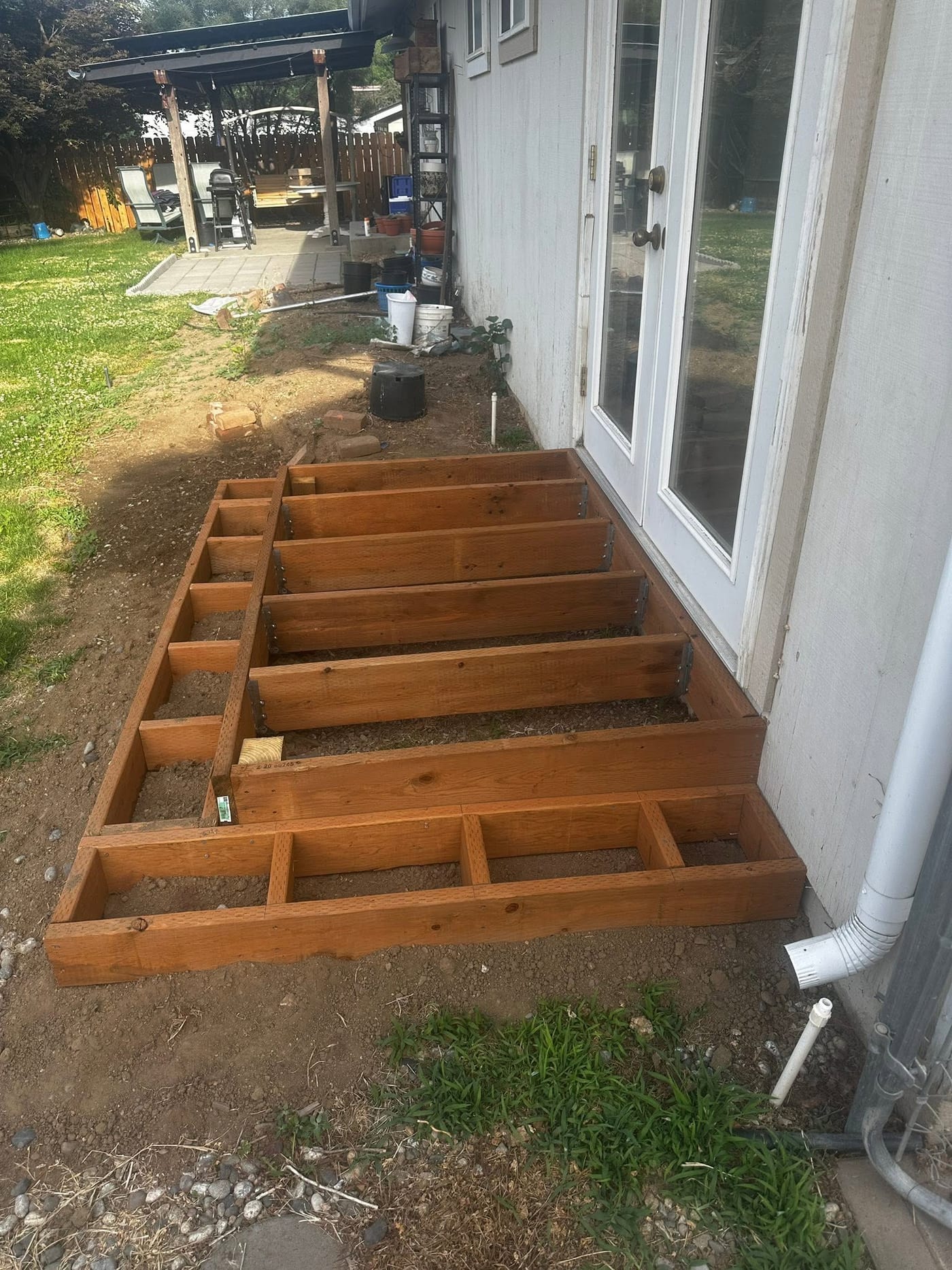
- Landings and back-entry steps
- Stairs added or rebuilt to a new height
- Railings built to code for the drop
Upkeep
- Deck staining and sealing
- Fastener replacement where screws have backed out
- Pressure washing before a re-stain
How Deck Work Usually Goes
Most deck calls start with the surface. Boards have gone grey, one flexes underfoot, a railing moves when you lean on it. Those are the symptoms people notice, and they are almost never the thing that decides what the job costs. The framing underneath is what decides it, so that is where we start.
A deck in Central Washington takes a particular kind of beating. Long dry summers check and split the exposed edges of joists, especially on the south and west faces, and then the freeze and thaw cycle works at anything already opened up. The part that matters most is where the deck ties into the house. Done without flashing, that ledger connection quietly sends water into the wall for years before anything shows on the inside.
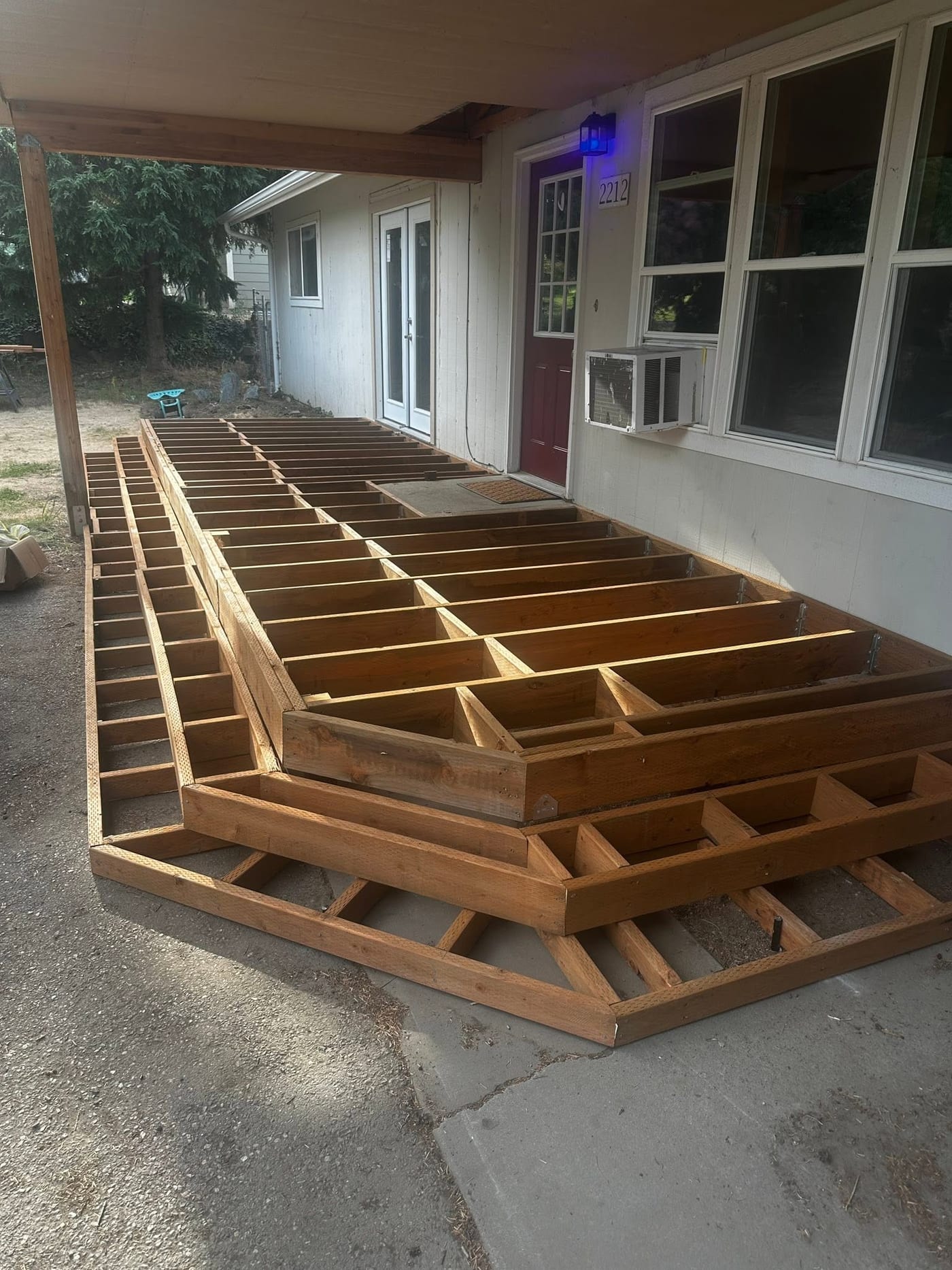
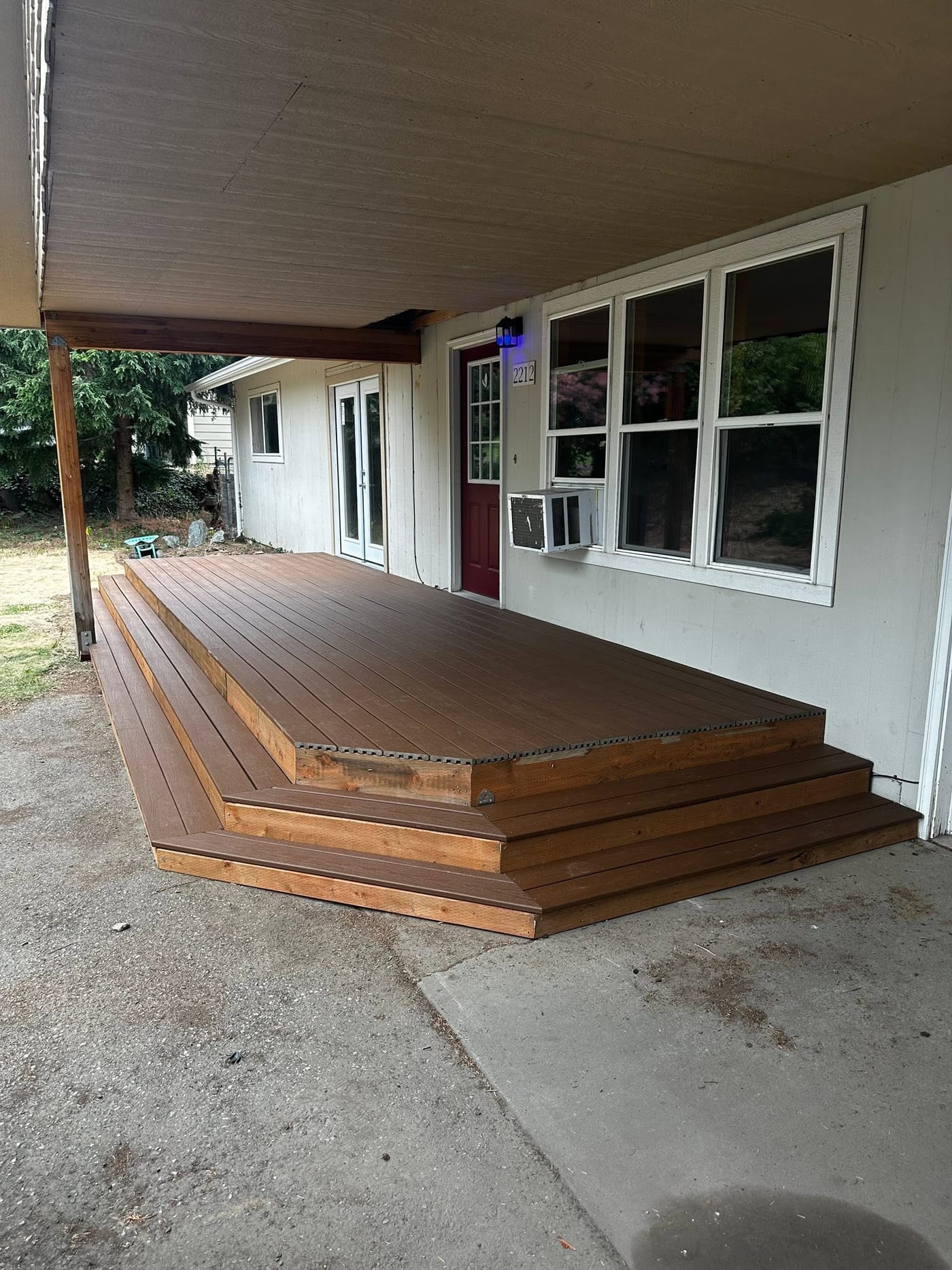
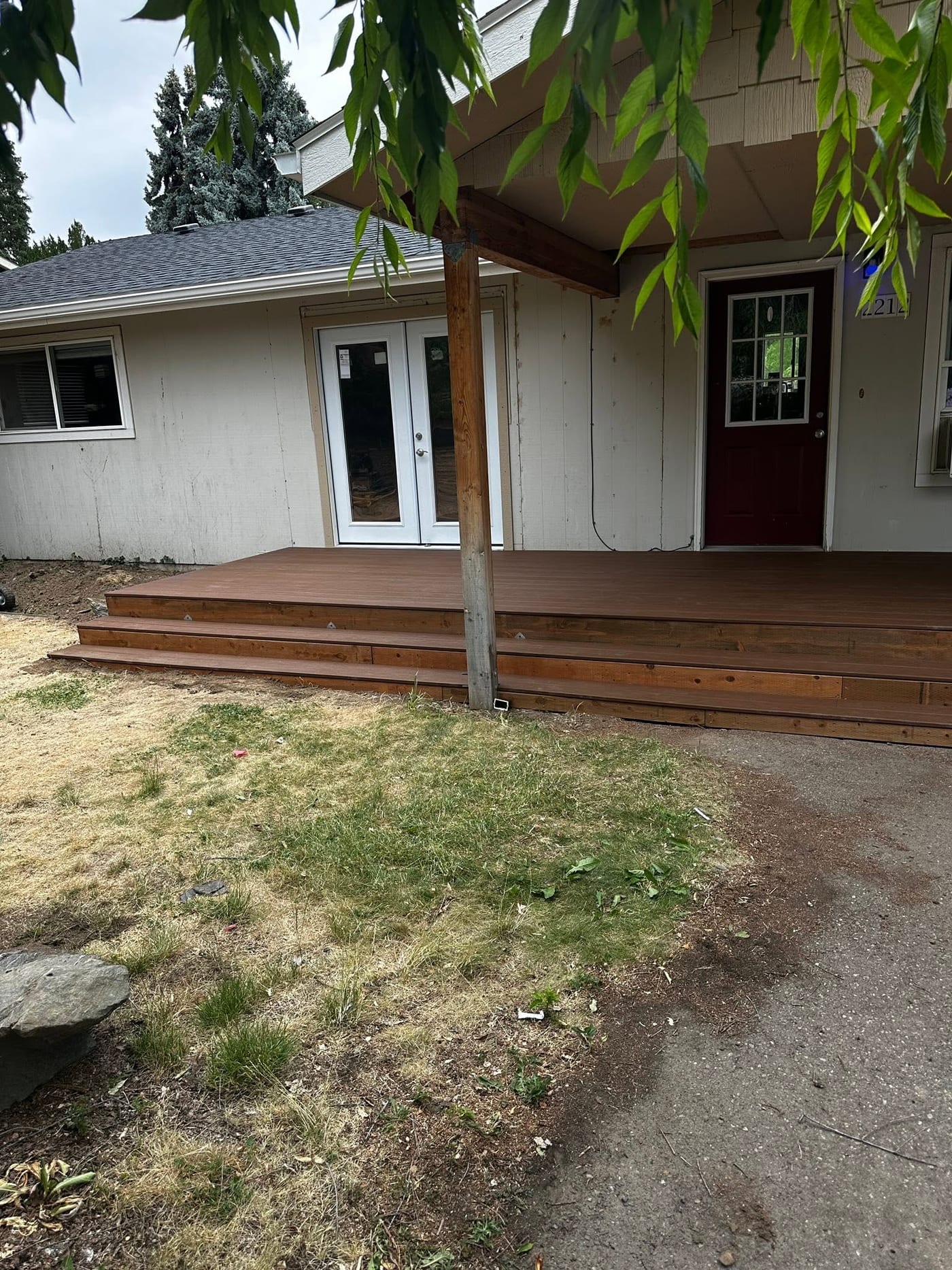
If the structure is sound, replacing boards and resetting railings gets you most of a new deck without paying for one. If it is not, we will show you what we found and say so plainly, because covering a failing frame with new decking only buys a season or two. Either way you get the reasoning, not just the number. We rebuilt one in Quincy from the framing up, and the photos show what the structure looked like before the boards went on.
Questions
Deck Questions
The things people ask before a deck job starts, answered the way we would answer them on the phone.
Should this deck be repaired or rebuilt?
The framing decides it, not the boards. Cupped, split, or greying deck boards look like the problem but they are the cheapest part of the deck to replace. What matters is the structure underneath: the joists, the beam, the posts, and the ledger where the deck attaches to the house.
If that substructure is sound, a repair buys you years. Replacing boards and resetting railings gets you most of a new deck for a fraction of the cost. If the ledger is rotten or the posts have failed at grade, patching the top is throwing money at a deck that is already finished. We check underneath before quoting either one, and we will show you what we found.
What does the framing under an older Central Washington deck usually tell you?
Sun damage on the south and west faces is the first thing. The summers here are long and dry, and the exposed edges of joists check and split faster than most people expect.
The second is water sitting where the deck meets the house. That ledger connection is the single most important part of a deck and the most commonly done wrong. If it was attached without flashing, water runs behind it every time it rains or snow melts, and the damage happens inside the wall where nobody sees it. It is worth looking at even when the deck still feels solid underfoot.
Can you fix just the stairs or one soft section?
Yes, and it is a common call. Stairs fail before the rest of the deck because they take concentrated weight and sit closest to the ground, where they stay damp longest. A soft tread or a stringer that has started to rot can usually be replaced without touching the deck itself.
The same goes for one soft spot in the decking. We pull the affected boards, check the joist underneath, and replace what has actually failed. Matching weathered boards exactly is not always possible, so we will tell you up front how close the match will be rather than letting you find out afterwards.
How long does a deck build take once it starts?
A board and railing replacement is usually days, not weeks. A new deck from footings up depends on size, height, and whether it needs a permit, and permit review time is the part nobody controls.
You get a realistic window before we start, not an optimistic one. If weather or a materials delay moves it, you hear that from us first. Decks are also seasonal here, so the calendar fills through spring and summer and opens up in the cold months, which is worth knowing if your job can wait.
Ready to get it done?
Tell us about the project, or call and talk it through.