What This Covers
A single room or one peeling window casing is a normal call. Exterior paint that has started to lift is worth catching while the wood under it is still sound.
Interior
- Room repainting, walls and ceilings in one visit
- Doors, trim, and baseboards brushed out by hand
- Cabinet painting where the boxes and doors are sound
- Scuffs and touch-ups between tenants or before a sale
Exterior
- Siding repainting, scraped and primed where it has failed
- Fascia, soffit, and exterior trim repainted
- Front doors and garage doors refinished
- Fences, sheds, and outbuildings stained or painted
- Rot repair, cut out and replaced before painting
Prep Work
- Drywall patching, from nail pops to a full sheet
- Texture matching so the patch disappears under the paint
- Water stain sealing with a stain blocking primer first
- Caulking at joints opened up by freeze and thaw
- Washing and de-glossing so the new coat can bite
How Paint Work Usually Goes Here
Most painting calls start with a color, and that is the easy half. What decides how a finish looks and how long it holds is the surface under it, and that is where most of a day goes. Sanding, patching, caulking, washing off dust, priming the bare spots. The paint itself is the last part of the work, not the whole of it.
Exteriors here fail in a pattern. The south and west walls go first, because the summers are long and the sun sits on them until the finish chalks and the caulk lines open, and then freeze and thaw works at what is already open. The other cause is water nobody is thinking about. A lawn sprinkler that clips the siding every morning does more to a wall than the weather does, and hard water leaves a mineral film that a new coat cannot grip. Blowing dust settles on everything, so a wash comes before a brush.
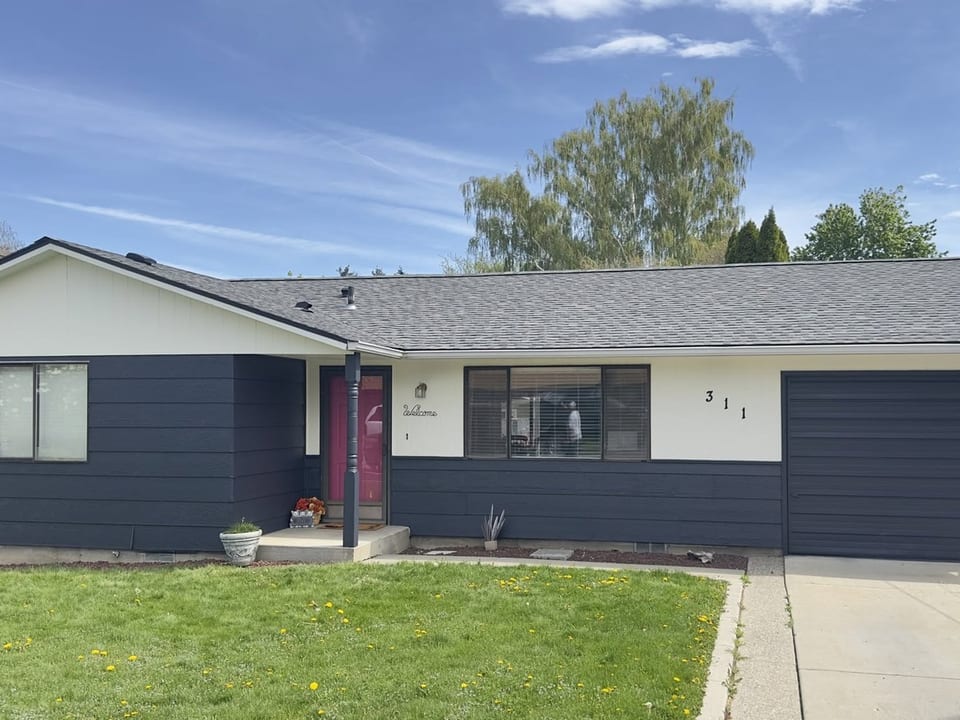
If a surface will hold paint, the job is prep and two coats and nothing exotic. If it will not, we say so rather than selling a finish that peels in a season. Some of it is not a paint problem at all. Rot gets cut out and replaced before a brush touches it, and a plumbing leak under a cabinet goes to a plumber, a roof edge that needs tearing off goes to a roofer, rather than under a coat of paint. The full exterior we repainted in navy and cream is the clearest example of what a week of prep and paint changes.
Questions
Painting Questions
The questions that come up before a painting job starts, answered the way we would answer them on the phone.
Why did my exterior paint start peeling after only a few years?
It is almost never the paint that failed. Paint lets go because of what was under it or what kept getting it wet. Bare wood that was never primed, a chalky old finish the new coat could not bite into, or a surface that was still dusty when it got coated.
The cause people miss most here is irrigation. A sprinkler head throwing onto the siding every morning keeps the wood damp behind the film and pushes the paint off from the back, and hard water leaves a mineral crust that nothing sticks to. South and west walls take the worst of the sun on top of that. We look for the source before quoting a repaint, because a fresh coat over an active problem fails just as fast as the last one did.
Can you touch up one wall instead of repainting the whole room?
Sometimes, and we will tell you which before we start. A touch-up works when the paint is recent, the sheen is flat, and the original product is still around. It shows when the sheen has any shine to it, when the patch sits where side light rakes across it, or when the wall has faded, which happens fastest on a wall that takes summer afternoon sun.
When it will show, the answer is to paint that wall corner to corner. A wall breaks naturally at the inside corners, so a full wall blends where a spot repair will not, and it is less work than the whole room. On a rental turn or a room that has taken years of scuffs, one wall at a time is the sensible order. We will point out on the wall itself which of the two you are looking at.
Is it worth painting our kitchen cabinets, or should we replace them?
Look at the boxes and the doors before you look at the color. If the boxes are solid, the doors hang square, and the hinges still hold, paint is a real option, and it changes a kitchen more than any other paint work in the house. Degreasing, scuff sanding, and a bonding primer are what make it last, not the topcoat.
If the doors are laminate or thermofoil and the skin is lifting, paint is a short term answer. Coating a peeling face traps the problem under the finish and it comes back. Same with a box that has swollen at the sink from a slow leak. We will tell you which one you have, and if it is the leak, that goes to a plumber before anything gets painted.
When can exterior painting actually happen around here?
Surface temperature and wind set the calendar, not the forecast high. The surface has to stay in range while the coat cures, and the day to night swing here is wide enough that a wall painted late in the afternoon can be sitting in dew a few hours later. Cold mornings in spring and fall push the start time back.
Wind and dust decide more days than rain does. Blowing dust settles into a wet film and stays there, so a windy afternoon in farm country is a lost afternoon, and smoke season can do the same thing. We schedule exteriors around those windows and move a day when we have to, rather than pushing on a coat that will not hold.
Ready to get it done?
Tell us about the project, or call and talk it through.