What This Covers
One squeaky hallway, a single cracked tile, or a run of baseboard that never went back on after a repair is a normal call. Floor problems near a dishwasher, a fridge line or a toilet get worse the longer they sit, and the subfloor is where the waiting shows up.
Floors
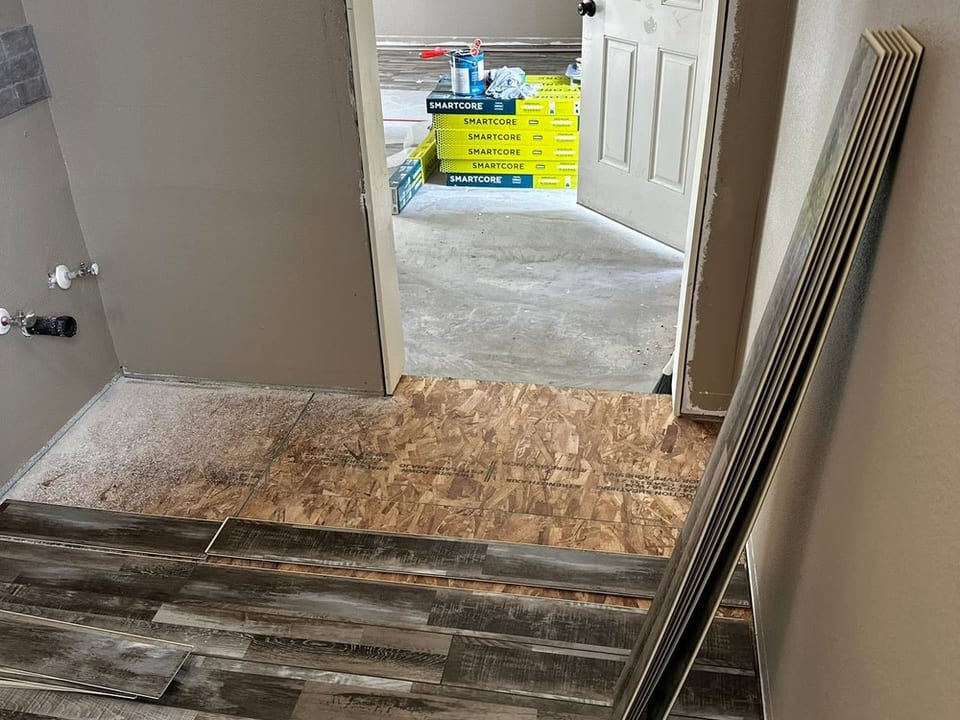
- Vinyl plank and laminate installed over a prepped subfloor
- Tile floors set, and cracked or loose tile replaced
- Damaged sections cut out and pieced back into the floor
- Old carpet and pad pulled out, furniture moved and returned
Subfloor
- Squeaks traced to loose subfloor and screwed back down
- Soft spots opened up to find what caused them
- Subfloor sheets replaced where water got underneath
- Flattening and patching before a floating floor goes down
Trim
- Baseboard and shoe molding run, mitered and coped
- Door casing and window trim replaced or added
- Transitions and thresholds between rooms and at exterior doors
- Door bottoms and jambs undercut to clear a new floor
- Caulk and filler at miters and along the wall
- Stair treads and risers with nosing to match
How Floor and Trim Work Goes
Most flooring calls start with the material. Someone has picked a color, a plank width, a tile. That is the easy half of the decision, and it is almost never what decides how the finished floor looks or how long it lasts. The subfloor underneath decides that, so that is where we start: how flat it is, how solid it is, and whether anything has been getting it wet.
Floors here move more than people expect. Summers run long and dry, winters run dry indoors once the heat is on, and the swing between a hot afternoon and a cold night is wide most of the year. Wood floors and wood trim answer that by shrinking and growing all year. It is why gaps open along baseboards, why miters on door casing crack apart mid winter, and why a floating floor set tight to the wall lifts at the seams. Blowing dust and farm grit work at the finish inside entry doors.
If the subfloor is flat, dry and fastened down, what goes over it has something solid to sit on. If it is not, you will hear that before anything gets ordered, because a soft spot covered with new plank is still a soft spot. A wet subfloor that traces back to a supply line or a drain goes to a licensed plumber, and framing that has lost strength goes to a structural engineer, not to us working around it. The floor is only ever as good as what it is sitting on.
Questions
Flooring Questions
The questions that come up before a floor goes in or the trim goes back on, answered straight.
Is this floor worth repairing, or does the whole room need to be replaced?
What is under the floor decides it, not what you can see. Worn planks, a cracked tile, a stained patch of vinyl: that layer is the cheapest part of the floor to change. What matters is the subfloor under it. If that is flat, dry and still fastened tight to the joists, replacing a section or the whole surface is normal work.
If it is not, patching the top is money spent twice. A soft spot means something got the sheathing wet, and until that source is fixed the new floor sits on the same problem. We open up enough to see the cause first. A supply line, a drain or a leaking toilet flange goes to a licensed plumber before flooring goes back down. Matching an existing floor is the other honest limit, so we tell you how close the match is likely to be before you decide.
Why do gaps keep opening at my baseboards and between the boards?
Dry air, mostly. Wood and wood based flooring take on moisture and give it back with the seasons, and it swings hard here: long dry summers, then dry indoor air all winter once the furnace or the wood stove is running. Boards shrink, trim shrinks with them, and the gap shows up at the wall where shoe molding no longer covers it.
What matters is whether that movement is normal or the floor was installed tight. Seasonal gaps that open and close get handled with trim and caulk, done at the right time of year so the joint is not fighting the wood. A floating floor laid tight to the walls is a different problem. It has nowhere to go, so it peaks at the seams or pushes the baseboard out instead. That one gets opened up at the perimeter, not caulked shut.
Can you do one room, or fix just a small section?
Yes, and small jobs are normal here. A hallway that squeaks underfoot, one cracked tile, a run of baseboard that came off during a repair and never went back on: those are real calls, not favors. Small floor problems are also the cheapest kind to catch, especially anywhere near a dishwasher, a fridge line or a toilet.
Matching is the part to think about. Flooring lines change, so a plank bought a few years ago may not be made in that color now. Long bright summers also shift stain and finish, so even the correct product can read differently next to what is already down. If there are leftover boxes in the garage or the crawl space, hang onto them. Otherwise we look at whether a transition strip or taking the repair to a natural break in the room reads better than a patch that almost matches.
How long does a floor take, and do we have to move out?
Prep is what sets the schedule, not the square footage. Old tile or glued down vinyl has to come up, patch compound has to cure, and a subfloor that got wet has to dry before anything new covers it. A single room is usually days rather than weeks. Whole house work runs longer because furniture and appliances move room by room, and trim and doors go back at the end.
You can normally stay in the house. We work in sections, keep a path through, and set doors and baseboard back as we go so no room sits torn open longer than it needs to. Tile and adhesive need cure time before anyone walks on them, and you will know which rooms are off limits and for how long before the first board comes up. If the schedule moves, you hear it from us.

Ready to get it done?
Tell us about the project, or call and talk it through.